The 500 Martyrs of Tyre We celebrate the feast of the 500 Martyrs of Tyre on 19 February each year. Why then? It falls within a period of specifically Maronite […]
Read more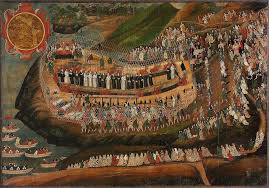
The 500 Martyrs of Tyre We celebrate the feast of the 500 Martyrs of Tyre on 19 February each year. Why then? It falls within a period of specifically Maronite […]
Read morePart one appears at http://www.fryuhanna.com/2022/01/28/ad-orientem-liturgies-part-i/ Last week we discovered three principles: that when the people are directly addressed, whether in the Latin or Maronite rite, the priest faces them. The second is […]
Read more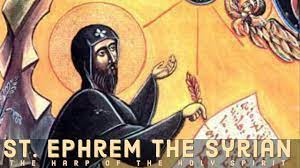
Greek was the language of educated Antioch, and the main language of the Church. But as we move towards the specifically Maronite tradition, we enter the world of Syriac. Ephrem […]
Read moreTo celebrate the Divine Liturgy ad orientem is to celebrate towards the East, with the priest and the faithful all standing before the altar. The opposite tradition is called versus […]
Read more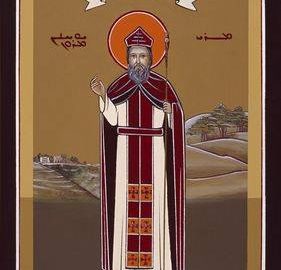
This is the third in a series. The first two are the following: http://www.fryuhanna.com/2022/01/14/the-maronite-liturgy/ http://www.fryuhanna.com/2022/01/20/0-3-the-four-known-classes-of-ancient-maronite-liturgies/ We saw in the last post that the 1592-1594 Missal issued by Rome was actually […]
Read more
This reflection on a prayer in all the Catholic and Orthodox liturgies is based on an interesting article by Sebastian Brock, “The Thrice-Holy Hymn in the Liturgy.” The hymn to […]
Read more
This post continues from the first in this series, http://www.fryuhanna.com/2022/01/14/the-maronite-liturgy/ 0.3 The Four Known Classes of Ancient Maronite Liturgies We shall refer to all liturgies older than the year 1736 as […]
Read more
When we look at the Maronite liturgy and its history, let us not lose sight of the most important fact of all: it is a supernatural, sacramental, sacrificial, liturgical action. […]
Read more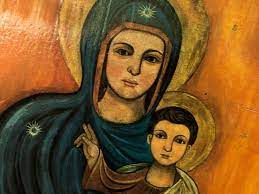
First of all let us ask our guardian angel to help us meditate well and dutifully upon the mystery of Our Lady, to commence with what it clear, and to […]
Read more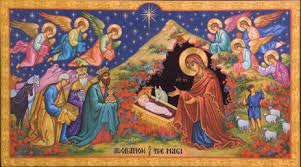
Jacob of Sarug’s First Homily on the Nativity In his first homily on the Nativity, written as a poem rather than a speech, St Jacob of Sarug presents two main […]
Read more